

The Meta connector sends ZMP Customer and Prospect audiences to Meta as Custom Audiences so you can target them in ads.
This destination should be configured prior to being able to use it. If this is not yet configured, you will be prompted to authenticate in Settings > Connections. If you have more than one account configured for this destination, you’ll be prompted to select it before you see a list of audiences.
A drop-down list of the custom audiences already available to export into will be displayed. If no custom audience is selected, a new one will be created with the name of the segment or list chosen as the source.
When the export runs, all the active contacts for a user are hashed and sent to Facebook to generate a custom audience.
Configuring the Connection
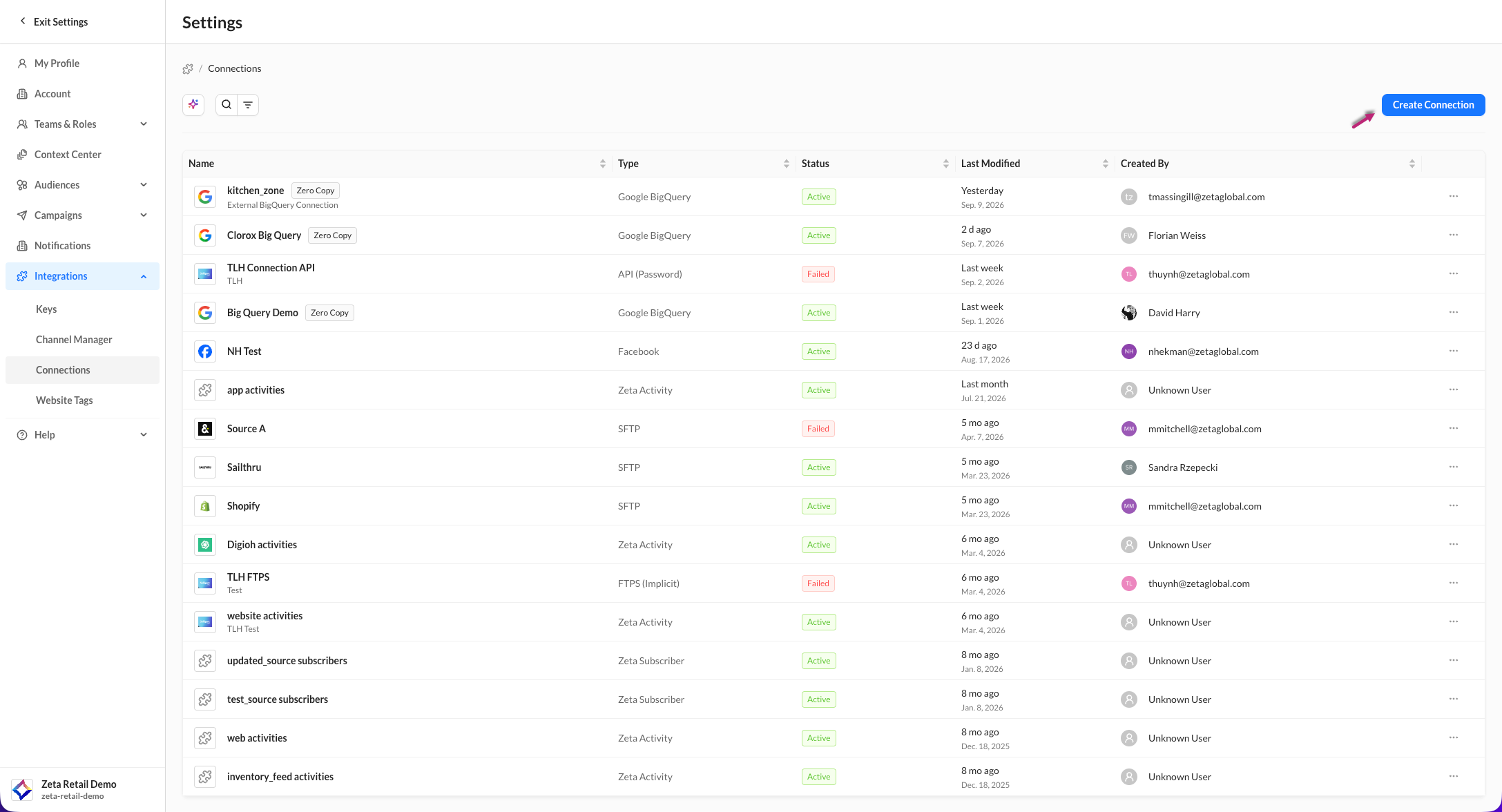
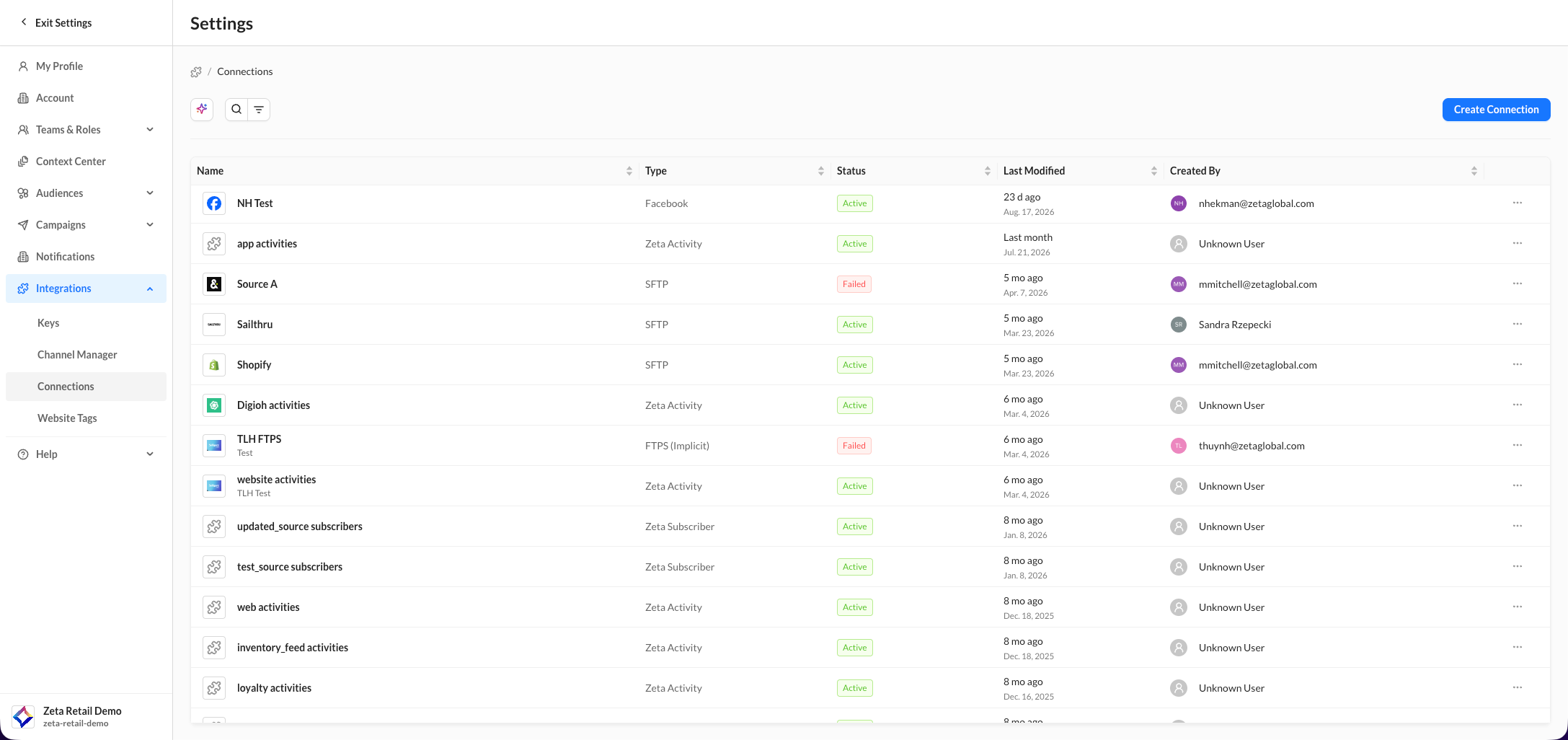
1. Navigate to Settings > Integrations > Connections. Click on Create Connection.
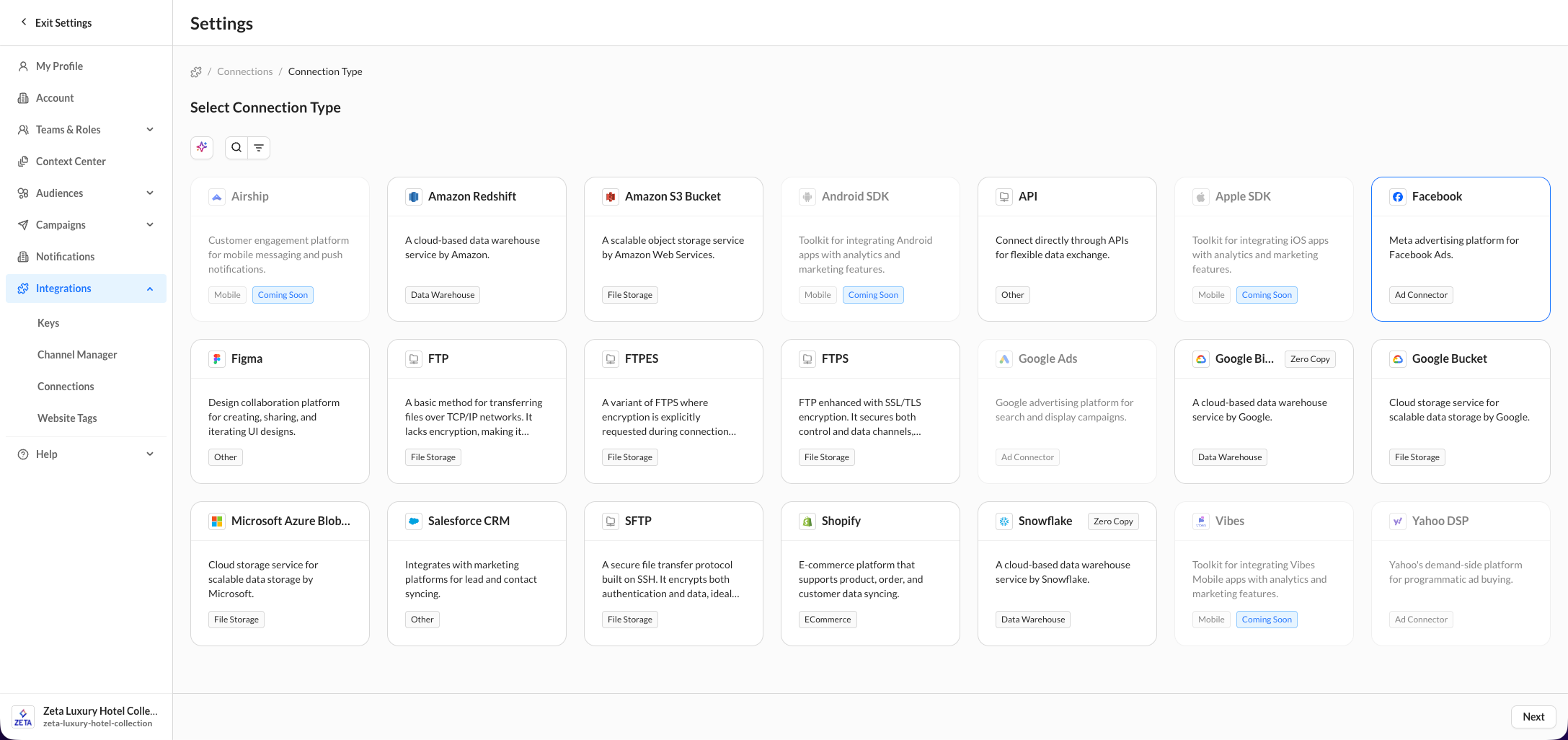
2. On the Select Connection Type page, click on the Facebook tile. Click on Next.
3. Once selected, the fields will resolve to a single Log in with Facebook button for you to sign in to your account via SSO. Clicking the button will open a pop-up for you to sign in.
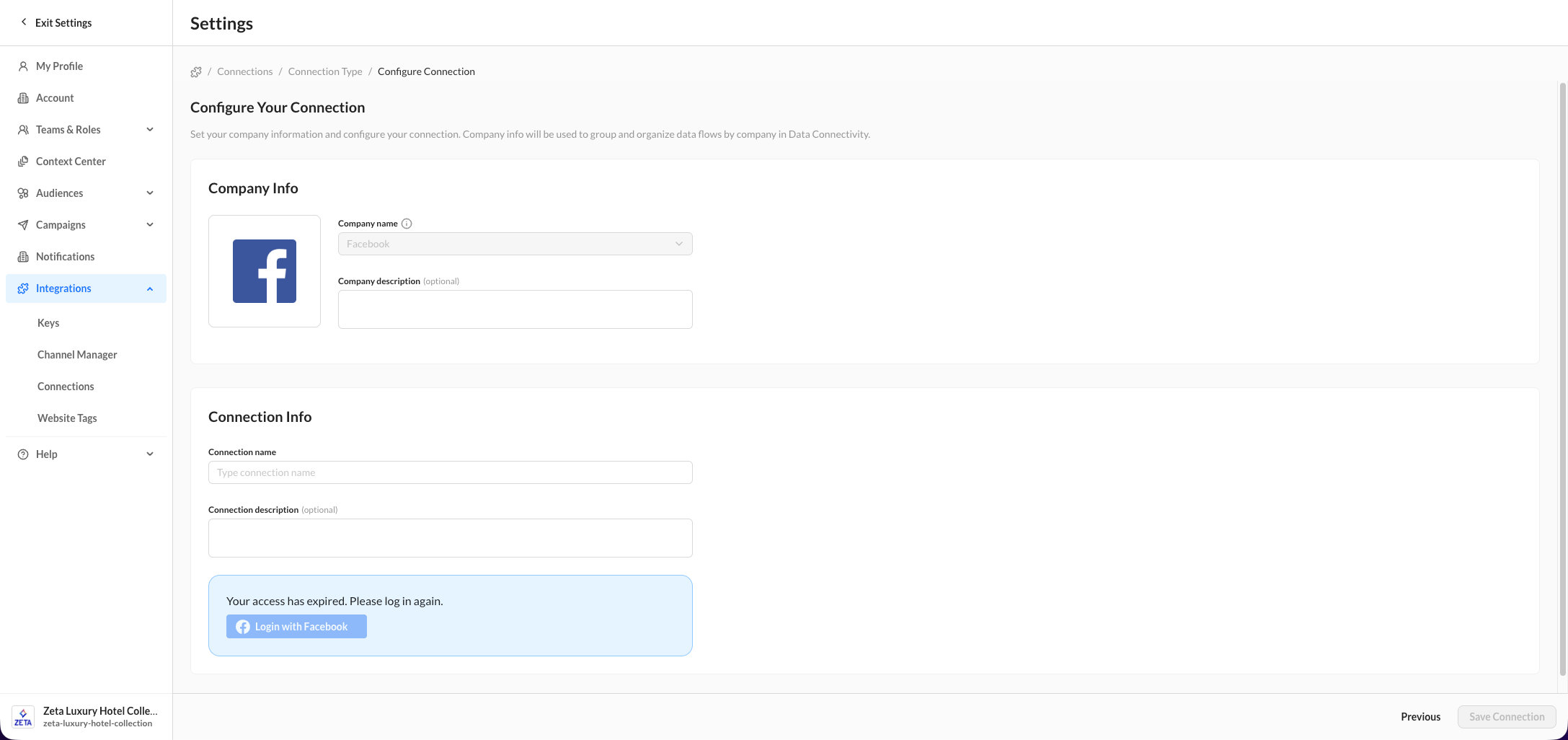
If your account already has Facebook set up through CRM Features, you can skip this section.
4. Once you log in, if you have Pages, add the relevant ones so you can use the Meta Leads feature.
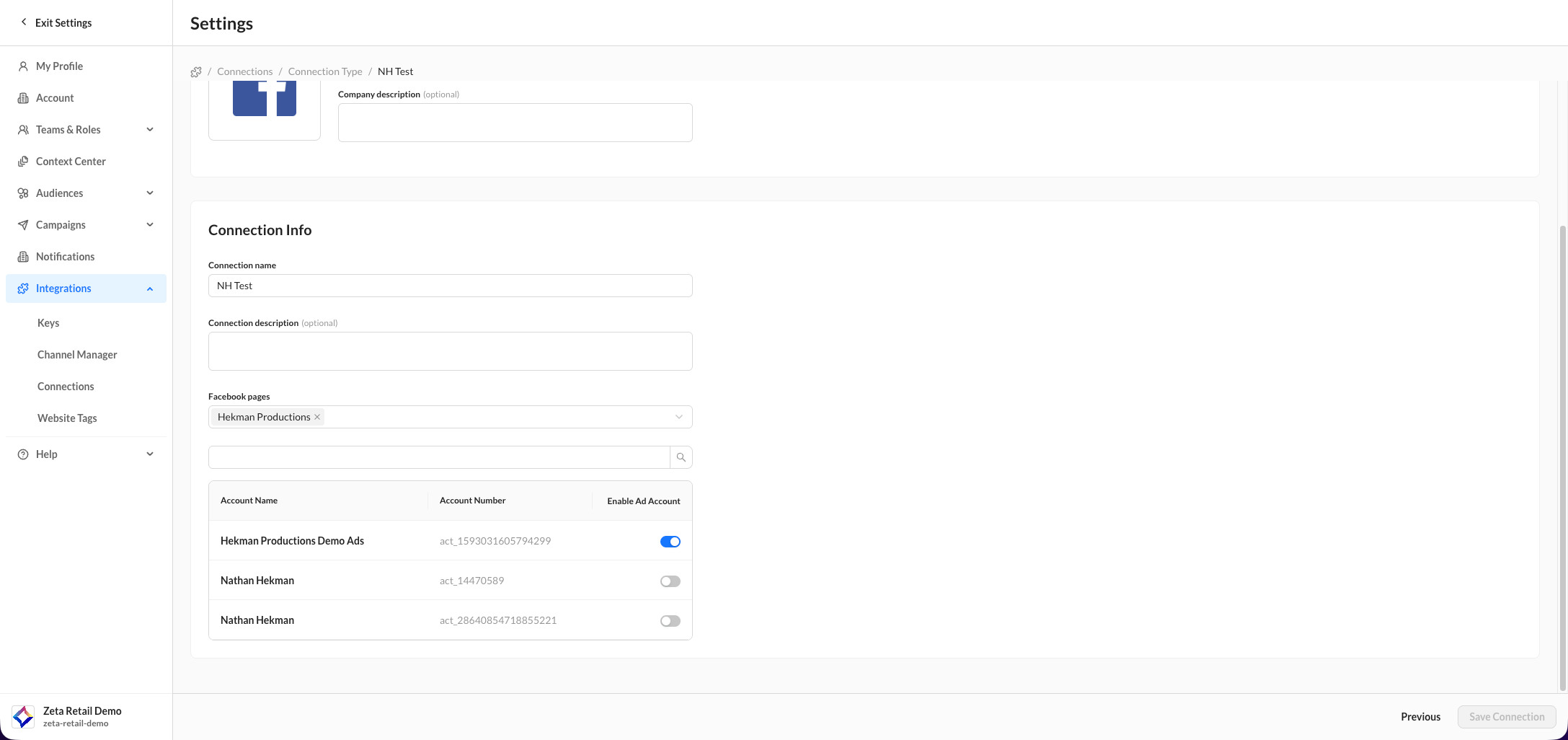
5. Once authenticated, all the Facebook ad accounts attached to your username will appear in a table. Check the boxes of the accounts you want to use on the current ZMP instance.
7. After clicking Save on the Facebook Connection page, you’ll be redirected to the Connections page where you can see the active status of your connection.
Facebook requires the approval of the following documents prior to allowing access to the Custom Audiences. Please note that if you are working on behalf of the client, they will need to approve these:
If you encounter any errors when exporting your audience to Facebook, please recreate the audience list/segment and try exporting the audience again.
Sync using Audience Exports
The process for exporting an audience to a partner destination is standardized across all connectors.
1. From Segments & Lists, locate the row of the audience you wish to export. Click on the action menu (three dots) on the far right and select Export.
2. Within the Connect Audience panel that appears on the right, select Facebook from the list of Available Connectors and click on Next.
3. From the list that appears, select the desired Facebook Account and Facebook Audience you want to export your audience to, and click on Next.
4. Click on Connect to save the export. Turn the Automate Connection toggle on to schedule your export.
-20260820-062143.gif)
For refreshable audiences like Prospect Segments, you can choose to export the audience one time or on a recurring basis. You cannot schedule a recurring export for Prospect List, Matched List, or Lookalike because you cannot modify existing items.
You can only export audiences up to 85MM to Facebook. Prospect Audiences will be further matched to email_sha256 identifiers in Data Cloud.
ZMP cannot execute Audience Export against inactive segments (archived/error).
Status Check
Processing audiences can take up to 48 hours depending on their size. There are 2 phases to the connector — uploading from the ZMP and downloading to Facebook. You can check the status on either side of the connector on each platform.
In ZMP
1. Navigate to Data > Files and select the Exports tab.
2. Find your file and check the status to ensure the counts match what’s on the Audiences page.
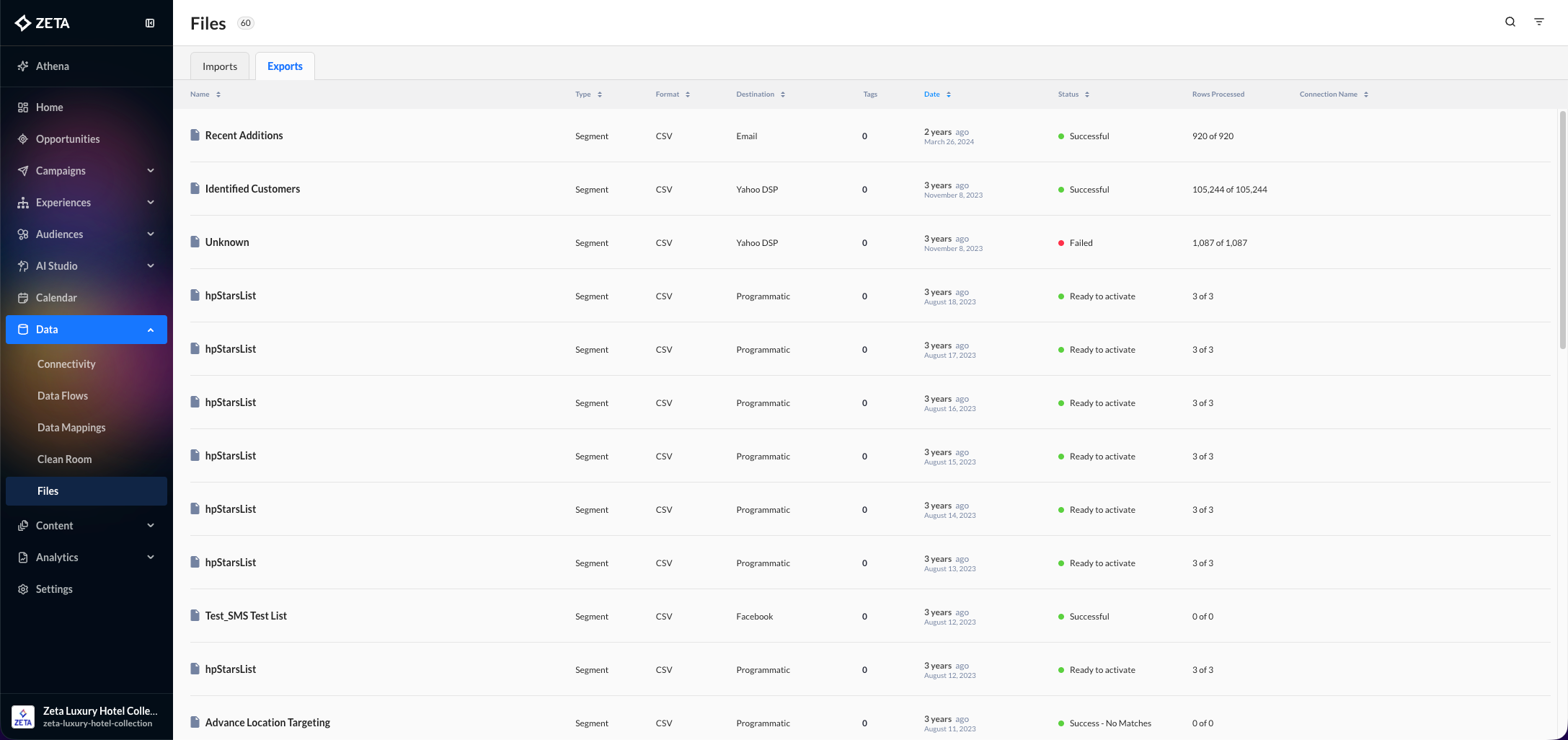
3. Click into the row to reveal data about the connector job, such as timestamps for exporting and processing functions.
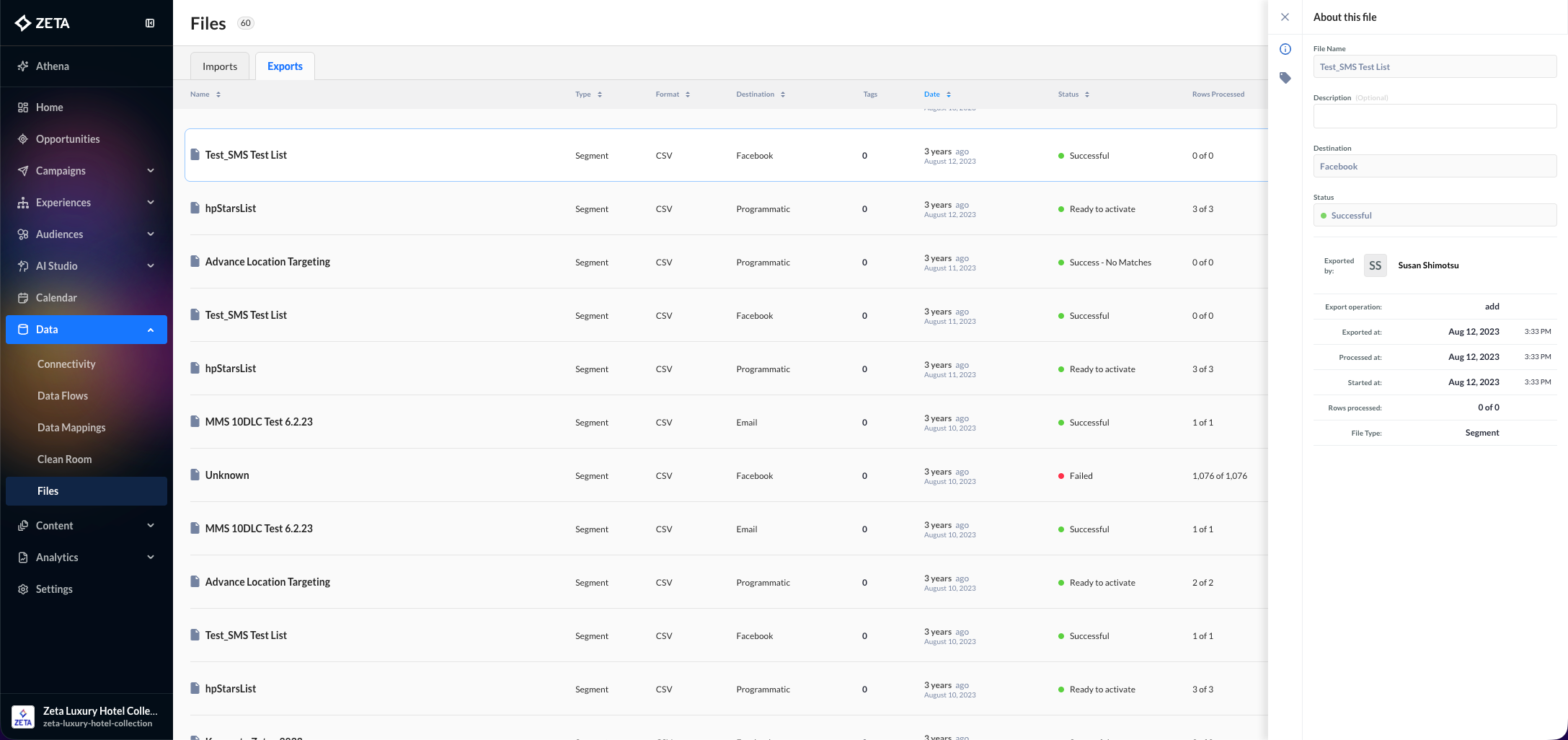
4. Click on the particular row to reveal the data about the connector task, such as timestamps for exporting and processing. If successful, the Processed at timestamp should match what’s shown in Facebook, such as the account the audience belongs to and the timestamps for exporting and processing.
In Facebook
1. Log in to Facebook Business and navigate to the correct sub-account for your client.
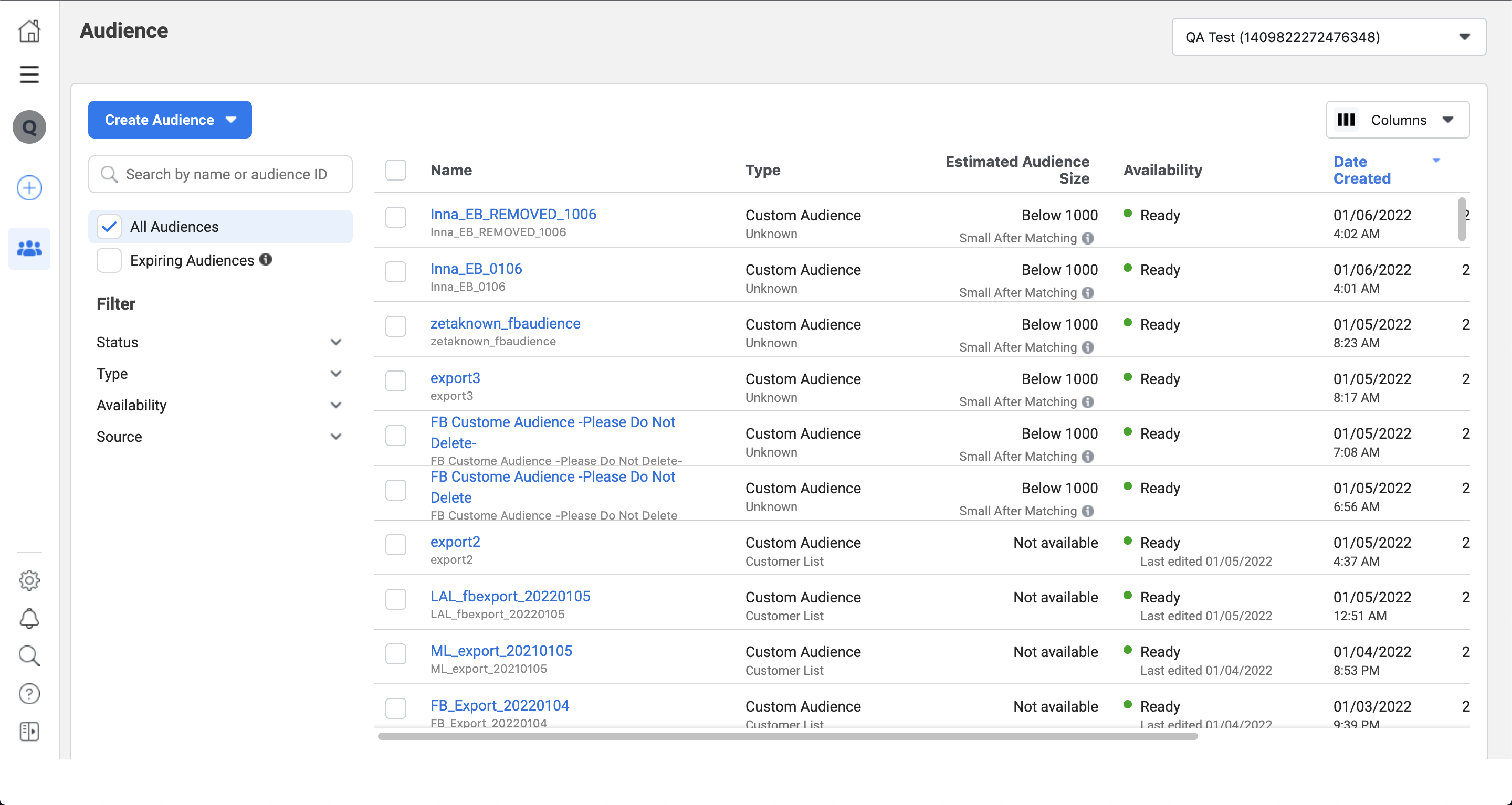
2. Navigate to All Tools > Audiences to open the audiences section of Ad Manager.
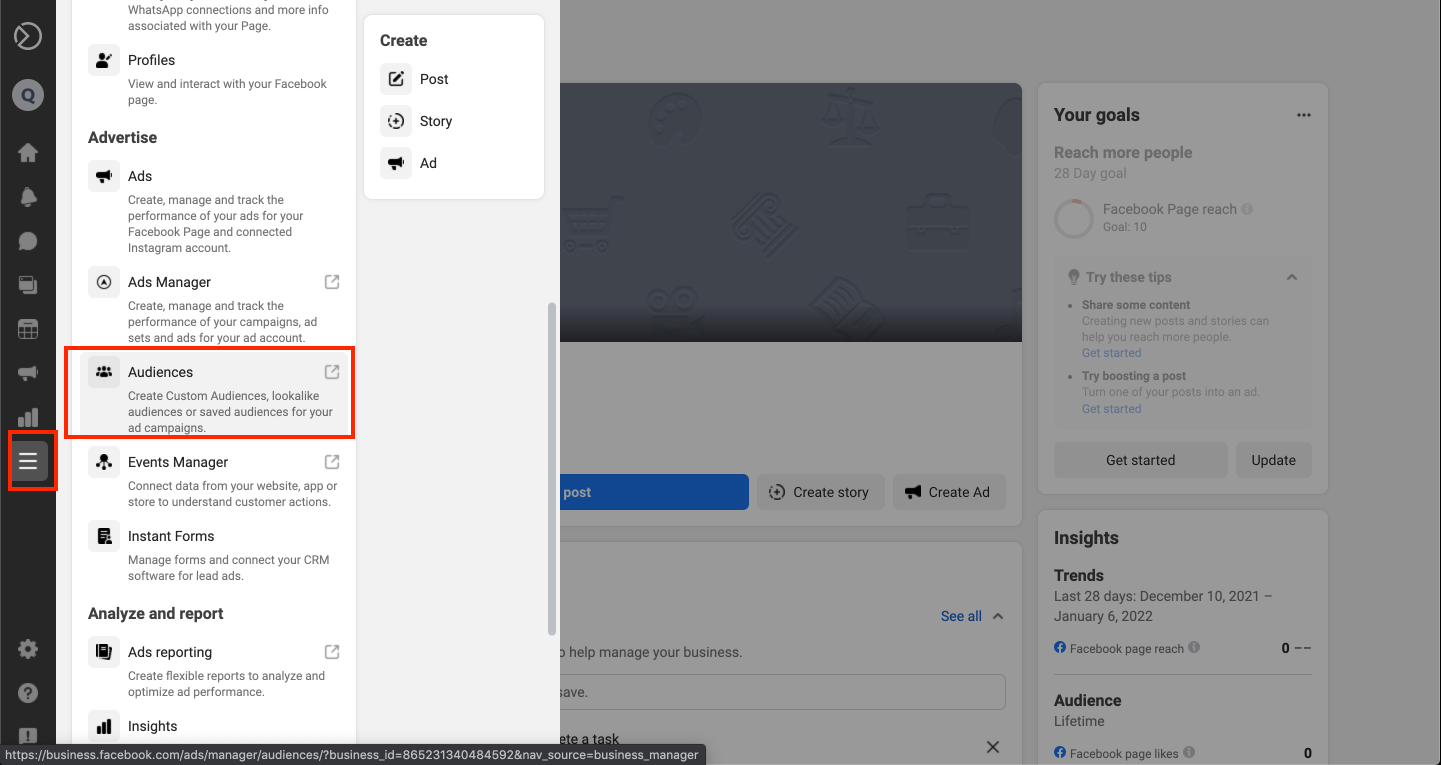
3. Search for the custom audience you either created or added from the ZMP.
Sync using Experience Builder
While Segments & Lists allow you to export audiences to Facebook in bulk, some campaigns require action-based criteria. With our automation tool Experience Builder, you can create trigger-based campaigns to determine how and when a person is added to a Custom Audience in Facebook.
1. Navigate to Experiences > Builder and click on Create Experience to open the canvas.
2. Begin building your experience by selecting a trigger event. Fill out your canvas with your relevant nodes.
While not mandatory, you can use the Split by Identity feature to segment users who enter your experience into three branches: Customer Known, Zeta Known, Unknown.
3. Select the + button on your Experience Builder canvas to open the node menu. Select Actions.
4. From the Actions panel, select Sync to Facebook.
5. From the Sync User to Facebook dialog box, select the Facebook account you want to use; if you only have one account authenticated, it will already be selected for you.
6. Select the Facebook Custom Audience you want to sync users to. Just as with Segments & Lists, you can choose an existing audience or create a new one.
7. Once selected, click on Add To Experience, and it will show up on the canvas as an Action node.
-20260910-153815.gif?cb=4056df092ea6c96ec63d63b0fcaa68d4)
Using Meta Lead Ads
Learn more about Meta Lead Ads.
In addition to sending audiences from ZMP to Facebook, you can also instrument lead ads on Facebook and Instagram that can take user data and send it back to ZMP. This feature is available as soon as you authenticate your Facebook account (as demonstrated earlier in this article) and add Facebook pages to your ZMP account.
In Facebook Ads Manager, create a new Lead ad and select the Facebook Page with which you want to publish the ad. Instagram accounts can be attached to Facebook Pages, which is how you can use Instagram ads to send lead data back to ZMP.
We don’t support Instagram accounts that are not part of a Facebook Page.
Testing your Connection
To verify your Lead Ads connection,
1. Navigate to Business Settings > Integrations > Leads Access. Select CRMs.
2. Verify Zeta Hub appears under Connected CRM apps.
3. Navigate back to Ads Manager to create your ad and create a Leads campaign in Ads Manager.
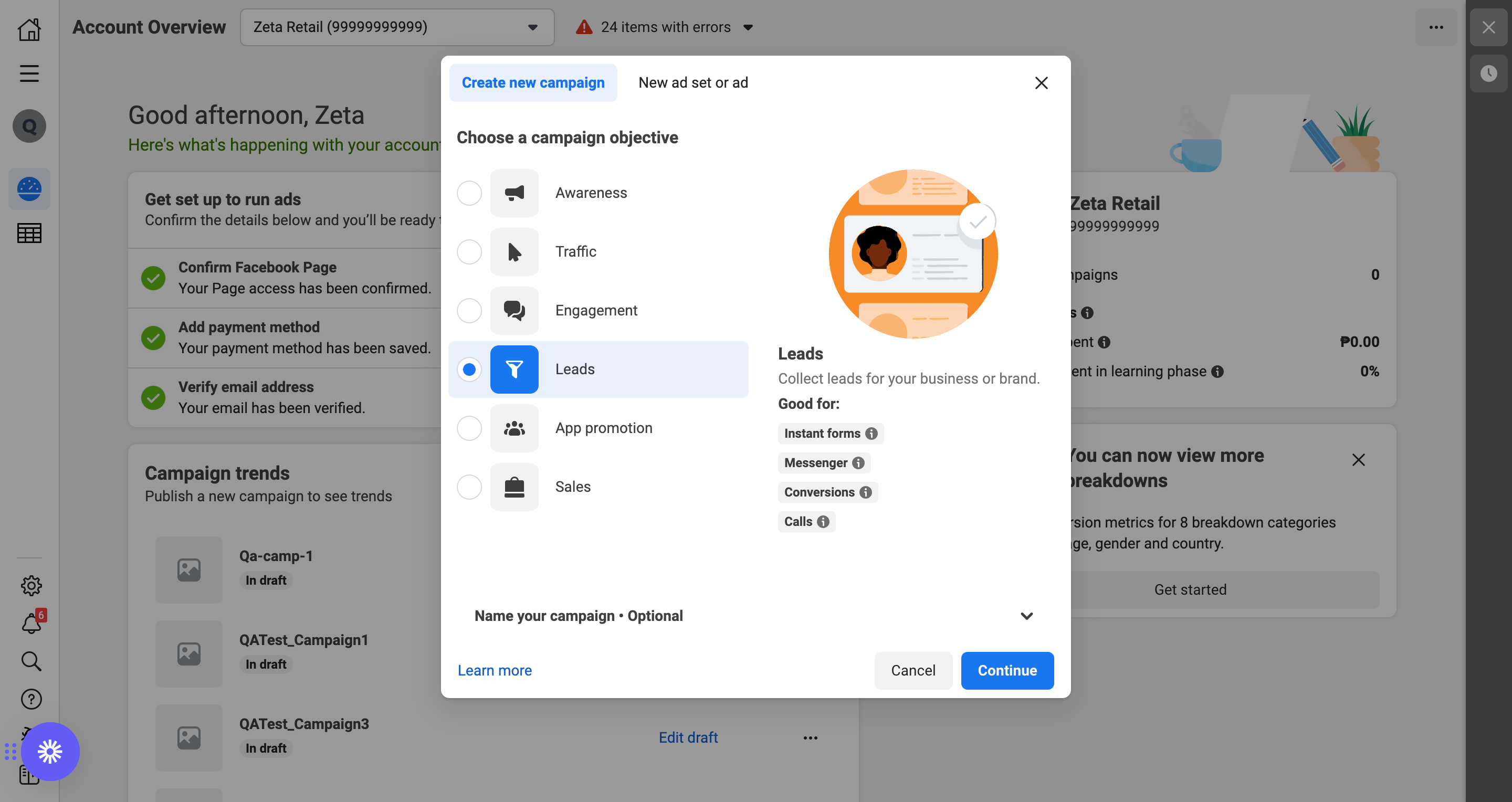
4. Once the campaign is created, navigate to the Lead Ads Testing Tool. Here, you can create a test form and verify that the information gathered in this form is pushed to ZMP via the facebook::lead_submitted event.
5. You can check the event and its payload by visiting Experiences > Events and searching for facebook::lead_submitted.
6. Once you turn on your campaign, you can look up newly submitted leads on the Events page as well as on the People page since each new lead should create a new profile in ZMP based on the form’s User ID. If a submitted User ID already exists, then the profile will simply update with the new lead data.
While this page walks you through Facebook Connector for Prospects, the Customer Version of this feature already exists in the ZMP.
|
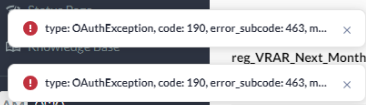
If you get this error message: |